
Vaganova on Plié
A plié is not a squat, though my knees make the same sound when I do them. Plié is…“bent” as in “to bend”, technically, but if you ask ballet dancers (and more specifically, ballet teachers), you will get a variety of supplemental definitions. From “making a diamond” to “giving birth to Apollo”, the words given to efficiently evoke the perfect plié in the dancer are infinite. In fact, this searching for the metaphor to describe a phenomenon of the mind and body is what poets and novelists do—except the teacher’s words need to achieve results in the studio and onstage.
Enter Agrippina Vaganova. Due to the typography and layout of the Dover reprint of her seminal work “Basic Principles of Classical Ballet: Russian Ballet Technique”, the very first page of instruction adds to the mystery of the plié.
The first paragraph states some facts and clarifies some terms. “Plié is done in five positions.” Okay, so are many steps, but this immediately conveys a sense of the universality of plié to technique. We then learn that it has an intermediate position (demi-plié) and a fuller expression (grand plié) and that mastery of the first must precede the second.
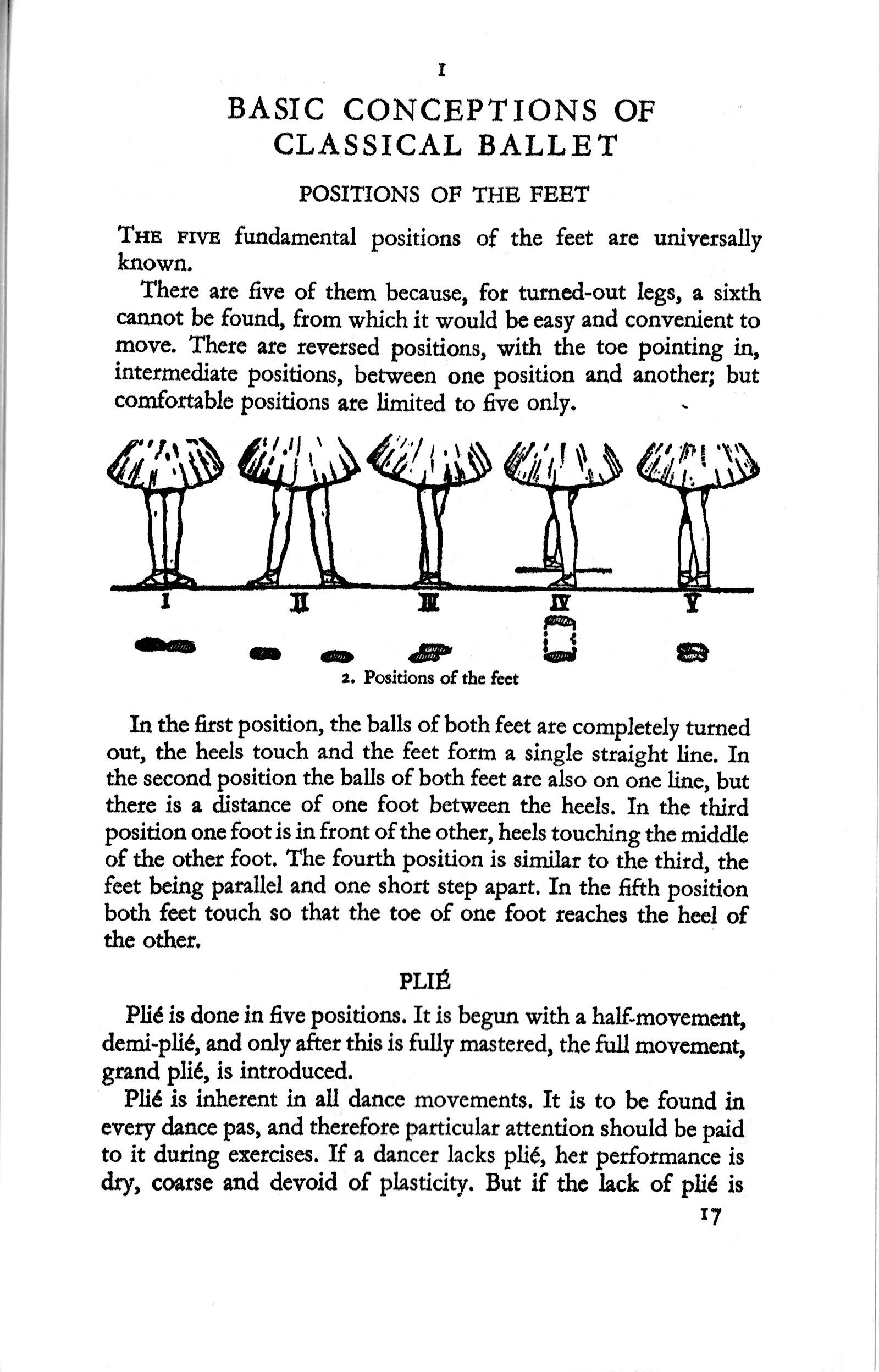
But it’s the second paragraph that gets cut off by the page break that I find charming and evocative of the mystery of all ballet passés. “Plié is inherent in all dance movements.” Goodness! This is philosophy and mysticism! “It is to be found in every dance pas, and therefore particular attention should be paid to it during exercises.” This makes plié sound like a field generated by dance, or the body, or something that is inchoate in the very nature of art, whether or not it is done well. So it had better be done well. “If a dancer lacks plié, her performance is dry, coarse, and devoid of plasticity. But if the lack of plié is…”
And here the page ends. No definition has yet been given and yet the something vital of the nature and importance of the movement is conveyed. Mme Vaganova, born in Russia in 1879 no doubt assumed her readers had either French or at least ballet-French, so perhaps the lack of glossing is unintentional. Or perhaps she didn’t and didn’t need to—the next page includes illustrations of correct and incorrect grand plié in multiple positions and foregrounds more of what is happening vis-à-vis the raising and lowering of the heel than the bending of the knee.
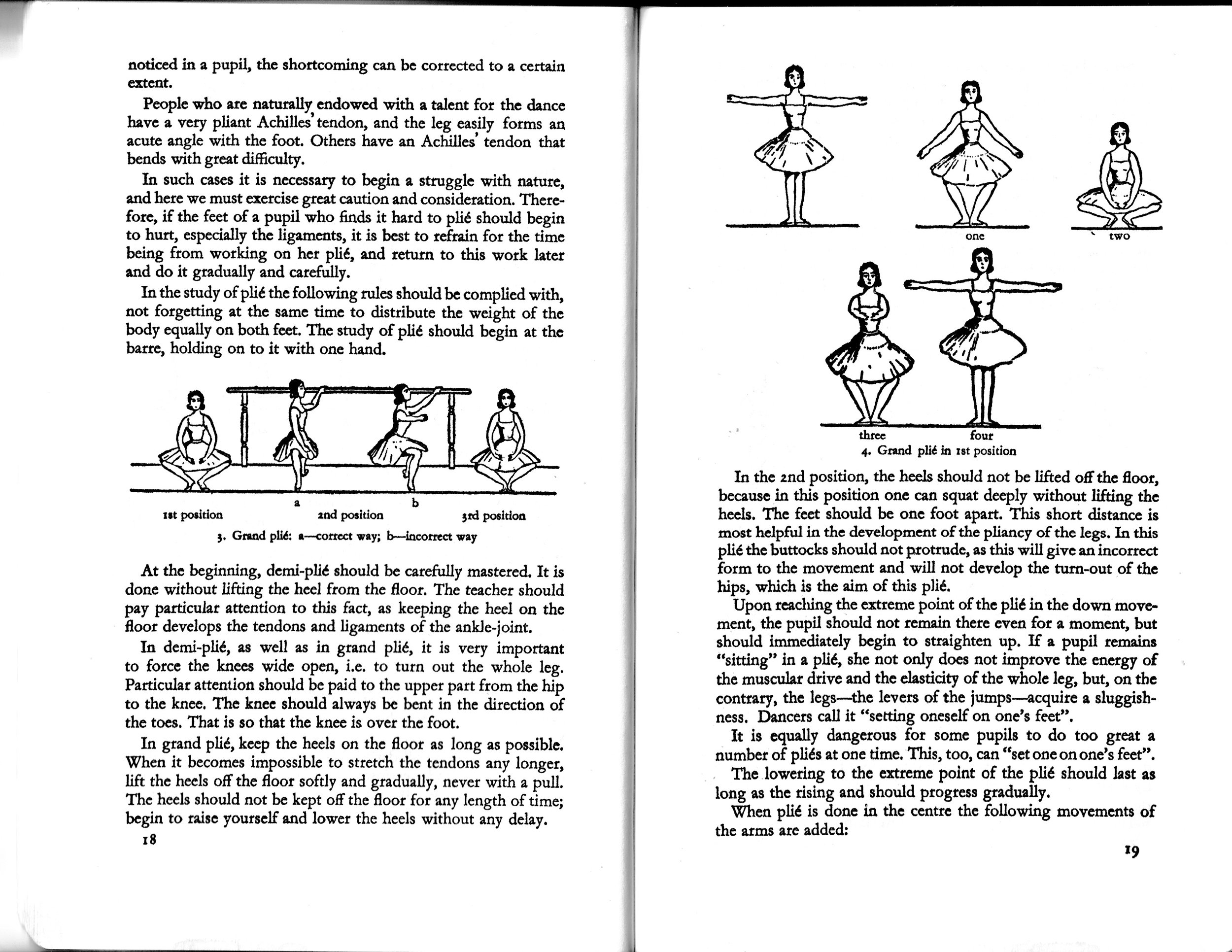
There is much wisdom beyond the barre in Mme Vaganova’s book, something true of great dancers and ballet teachers. I encourage everyone to visit or revisit it, whether you’re a dancer trained in Cecchetti or RAD or a poet or engineer looking for ways of describing complex phenomena in efficient, revelatory, and precise language. And as we enter 2026, let’s all work to find our plié, and to bend and not break.
If the idea of discovering your own plié (and the joy, strength, and artistry behind it) resonates with you, why not experience it in person?
The School of Madison Ballet offers Open Ballet Classes for adults of all levels, from complete beginners to those returning to the studio after time away. Whether you’re looking to refine your technique, stay active and engaged, or simply reconnect with the joy of movement, joining an adult class can be a rewarding way to bring the principles of ballet (like plié!) off the page and into your body.
Take the first step - click here to learn more and enroll today!
